

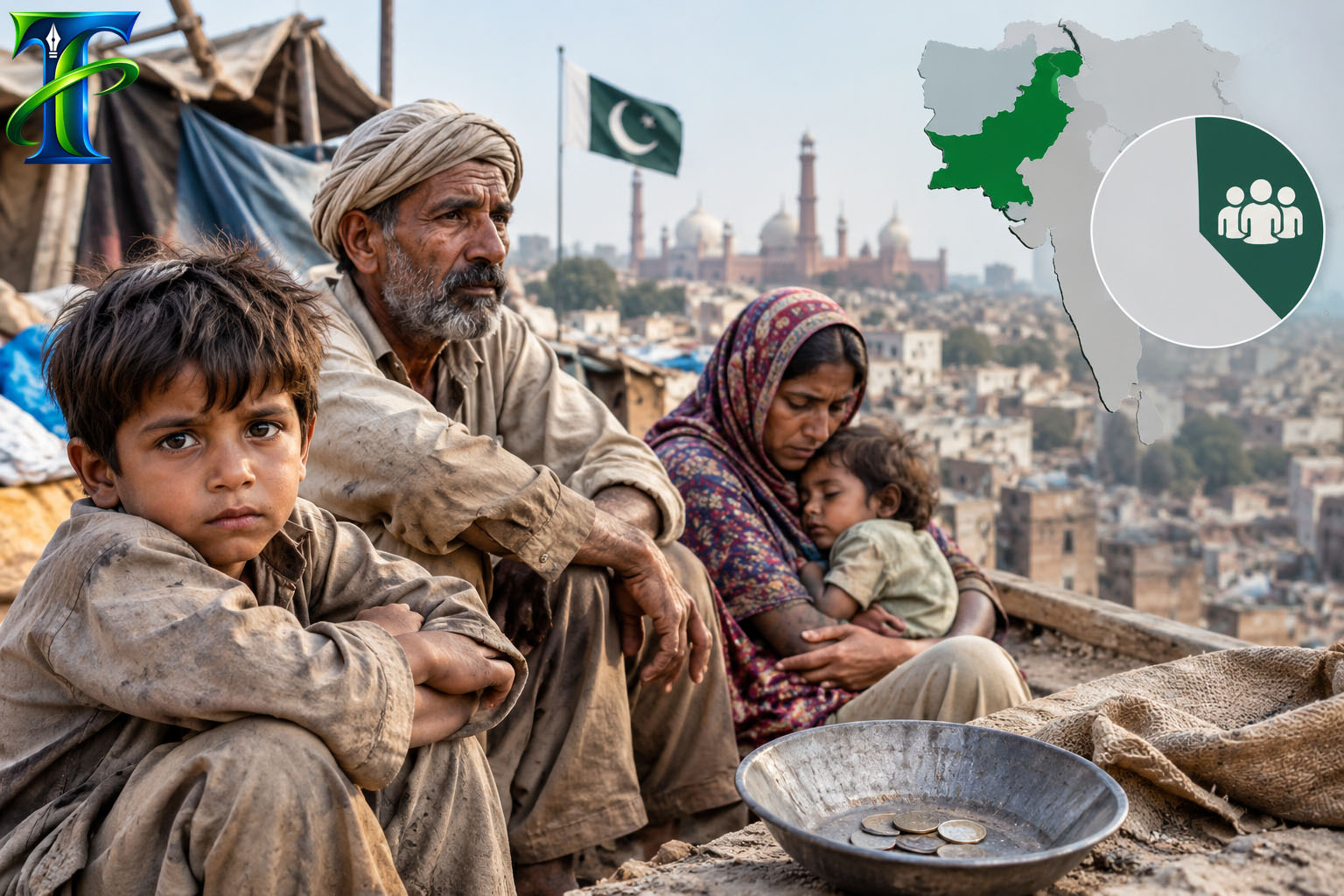
The World Bank’s latest report on poverty has revealed that 48 percent of the poor in the region live in Pakistan, while their daily income is less than the poverty line of $3 or about Rs. 840.
The ‘MENAP’ region includes the Middle East, North Africa, Afghanistan and Pakistan.
The World Bank report states that prolonged economic reforms have reduced real household income, which has not only increased poverty in the country but also reduced employment opportunities.
According to the report, the poverty rate in Pakistan increased by 6.4 percent at the $3 per day level from 2018-19 to 2024-25, while the increase was recorded at the $4.2 level. The World Bank estimates Pakistan’s GDP growth in the current fiscal year at 2.2 percent, almost the same as last year.
The report states that Pakistan has faced a series of negative economic shocks, including the COVID-19 pandemic and the devastating floods of 2022, economic crises, high inflation and a depreciation of the rupee.
According to the report, the increase in poverty at the regional level was mainly due to the increase in poverty in Pakistan. Referring to the economic impact of the Middle East conflict, the World Bank pointed out that since the beginning of the conflict, petrol prices in Pakistan and Lebanon have increased by 40%, while prices have also increased in Syria and the United Arab Emirates.
Similarly, diesel prices have increased by more than 40% in Pakistan, while in Lebanon it has increased by 80% and in the United Arab Emirates by 70%.
The report further states that oil-importing countries such as Pakistan, Morocco, Tunisia, Djibouti, Egypt and Jordan are facing various economic challenges. Rising prices of oil and essential commodities are increasing inflation, which is reducing fiscal capacity.
The report said that remittances from Gulf economies have also declined, while the cost of borrowing has increased and insurance has become more expensive due to risks.
According to the World Bank report, Pakistan’s private sector has not yet adapted to the emerging economic needs.
